Restaurant Simulator
Restaurant Simulator Key Strategies
Understand the game loop first
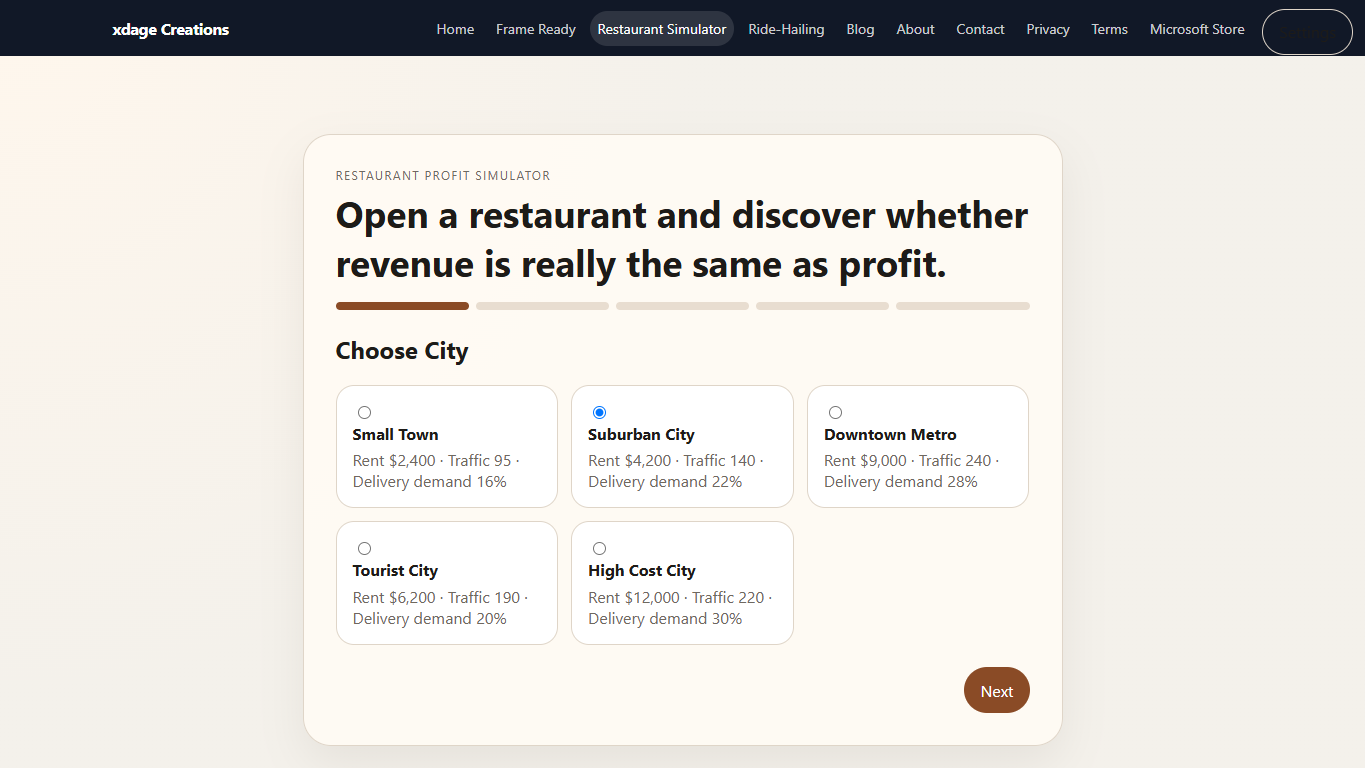
Restaurant Profit Simulator is about learning the difference between revenue and profit. Every restaurant model can generate sales, but sales alone do not make the business healthy. You choose a city, a location, and a restaurant model, then manage price, ingredients, staffing, menu complexity, marketing, delivery, and monthly financial pressure. The screenshot above shows the opening wizard, where the first major strategic decision is made before a single customer arrives.
A good player reads the dashboard like an operator, not like a scoreboard. Cash tells you whether you can survive today. Net worth tells you whether the overall goal is getting closer. Revenue shows demand, but the profit bridge explains whether demand is worth serving. Monthly reports reveal whether the business model is improving or just having one lucky day. This mindset matters for every choice, whether you run a pizza shop, a premium bistro, or a takeout-heavy concept.
City and location set the pressure
The city changes rent, wages, traffic, customer spending, and delivery demand. A high-cost city gives you more spending power and traffic, but it also raises the cost of being wrong. A small town is cheaper, but weak traffic can make fixed costs feel heavy. The location then shapes daily rhythm. Office districts favor lunch. Residential streets can help dinner and delivery. Shopping malls create weekend volume. Tourist spots can spike demand but may carry expensive rent.
Before choosing a model, ask what kind of demand the location will support. A restaurant that needs high seating volume should not be placed where traffic is thin. A premium restaurant needs customers who can support higher tickets. A delivery concept benefits from areas where delivery demand is naturally strong. The setup wizard is not cosmetic. It defines the economic weather you will operate inside for the rest of the run.
Profit bridge beats raw revenue
The profit bridge is the most important panel in the game. It turns revenue into food cost, delivery platform fees, payroll, marketing, rent, event costs, and final profit. When a day looks busy but profit is weak, the bridge tells you why. Maybe food cost is too high. Maybe delivery orders are creating platform fees. Maybe payroll was expanded before traffic justified it. Maybe month-end rent landed today and made a single day look worse than the month really is.
Do not respond to every weak day the same way. If the problem is demand, marketing or promotion may help. If the problem is margin, better pricing or menu cleanup matters more. If the problem is capacity, staff or operational simplicity can fix lost customers. If the problem is rent, you may need to judge the full month rather than panic on the rent day. The game rewards diagnosis before action.
Staffing is a lever, not a trophy
Hiring more people feels like progress, but payroll is one of the fastest ways to turn a promising restaurant into a cash drain. Add staff when a metric proves you need them. Lost customers, kitchen pressure, poor service capacity, and falling satisfaction are signs that the operation is underbuilt. If those signals are calm, adding staff may simply raise daily cost without increasing orders enough to matter.
Auto hire can be useful once the restaurant is stable, but manual review teaches more. Watch which role is actually limiting the business. A kitchen bottleneck is different from a dining room service bottleneck. Delivery-heavy restaurants need kitchen capacity more than servers. Full-service models need enough servers to protect satisfaction. The correct staffing answer depends on the model and location, not on a fixed rule.
Pricing and quality must work together
Low Price can increase conversion, but it can also weaken contribution per order. Premium Pricing can improve margin, but only if customers still accept the value. Ingredient quality has the same tradeoff. Cheap Ingredients may reduce food cost today, but weaker satisfaction can damage future demand and reputation. Premium Ingredients can support higher pricing, but they raise cost and require enough ticket size to pay for themselves.
A practical strategy is to start balanced, watch satisfaction and reputation, then make one change at a time. If satisfaction is high, reputation is strong, and lost customers are manageable, test a higher price. If satisfaction is slipping, fix quality or capacity before pushing price. If food cost share is too high, review menu and ingredient choices. The best changes are measured changes, not wild swings.
Menu complexity can quietly punish you
Adding dishes can improve variety and create new winners, but every item also adds complexity. A bloated menu can increase kitchen pressure and make service less reliable. Weak dishes should be removed when they do not justify their operational cost. The menu panel shows price, cost, margin, popularity, and complexity so you can treat the menu like a portfolio rather than a collection of favorites.
The goal is not always to have the largest menu. The goal is to have enough appealing items to generate demand while keeping execution clean. A simple menu with strong margins can beat a large menu that slows the kitchen. This is especially important for delivery-heavy models, where speed and consistency matter. When in doubt, remove weak dishes before adding more.
Use monthly reports to avoid overreacting
Daily numbers are noisy. Weather, events, rent timing, promotions, and random demand can distort one day. Monthly reports give a better view of whether the business is improving. Look for net profit trend, revenue trend, food cost share, payroll share, rent share, platform fee share, satisfaction, reputation, and staffing level. If profit improves while satisfaction remains stable, the business is getting healthier.
If revenue grows but profit does not, the growth is low quality. If profit grows but satisfaction collapses, future demand may be at risk. If cash is negative but monthly profit is improving, survival may depend on reducing short-term spend. The best players use reports to make slower, more informed decisions. That is the difference between managing a restaurant and simply clicking buttons.