Ride-Hailing Simulator
How to Play Ride-Hailing Driver Simulator
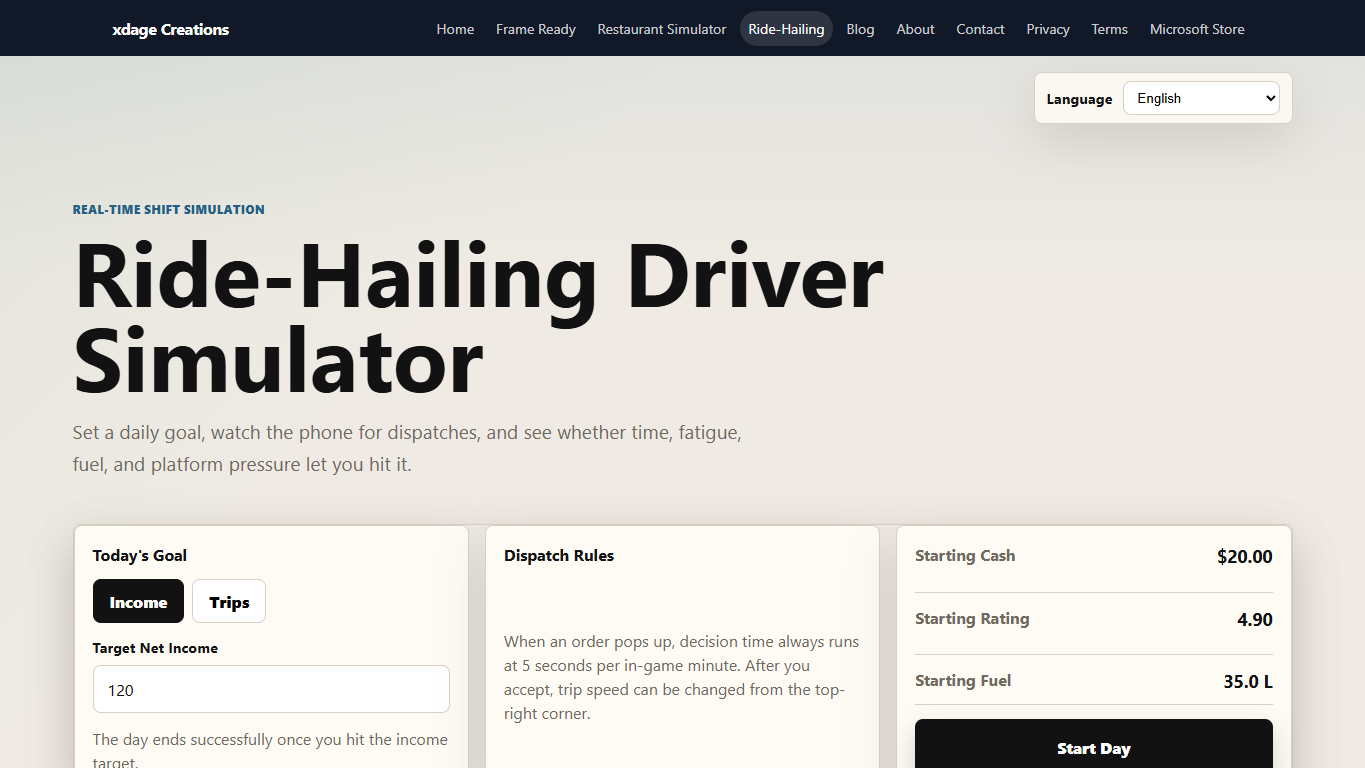
Ride-Hailing Driver Simulator is about the difference between gross earnings and real take-home income. The phone may show a tempting fare, but the driver still has to pay platform fees, fuel, time cost, and rating risk. The game asks you to make the same tradeoff again and again: should you accept the next order, reject it, rest, refuel, or end the day before the numbers get worse?
The default language for the simulator is English, and the language menu can be used to switch to Korean, Traditional Chinese, or Simplified Chinese during play. Starting in English makes the first experience consistent for new visitors, while the menu still keeps the game accessible for players who prefer another language. The most important part is that the rules are the same in every language: manage the day like a driver who cares about net income, not just busy work.
Choose the right goal
The setup screen gives you two goal styles. Income mode asks you to reach a target net income. Trips mode asks you to complete a target number of rides. Income mode is better if you want to learn the economics of driving, because it forces you to think about fees, fuel, and hourly return. Trips mode is better if you want a volume challenge where the main question is whether fatigue, fuel, and time will let you finish enough orders before the day ends.
For a first run, use the default income goal. It is simple enough to understand and strict enough to teach the right lesson. If you accept too many low-value trips, your completed ride count may look good while net income stays weak. If you reject everything while waiting for a perfect order, you lose time and may miss the daily target. The goal is not to accept every order. The goal is to build a day where each decision contributes to the final result.
Read each dispatch like a business decision
Every order card shows more than a destination. It includes pickup distance, trip distance, estimated time, gross fare, surge, estimated net, and risk tags. Pickup distance matters because unpaid driving still burns time and fuel. Estimated time matters because a long ride can block you from better future rides. Gross fare matters, but net fare matters more. Surge can be helpful, but surge can also come with rushed passengers and higher rating pressure.
Short trips can be useful when they turn over quickly, but they may not produce enough net income if pickup distance is high. Standard trips are often the safest baseline because they balance time, distance, and pay. Long trips can pay well but may consume fuel and large blocks of the day. Airport trips can be attractive when your rating is high and fuel is sufficient, but they are risky if you are already tired or far from the pickup point. Treat every ride as a small profit calculation.
Fuel is a strategic limit
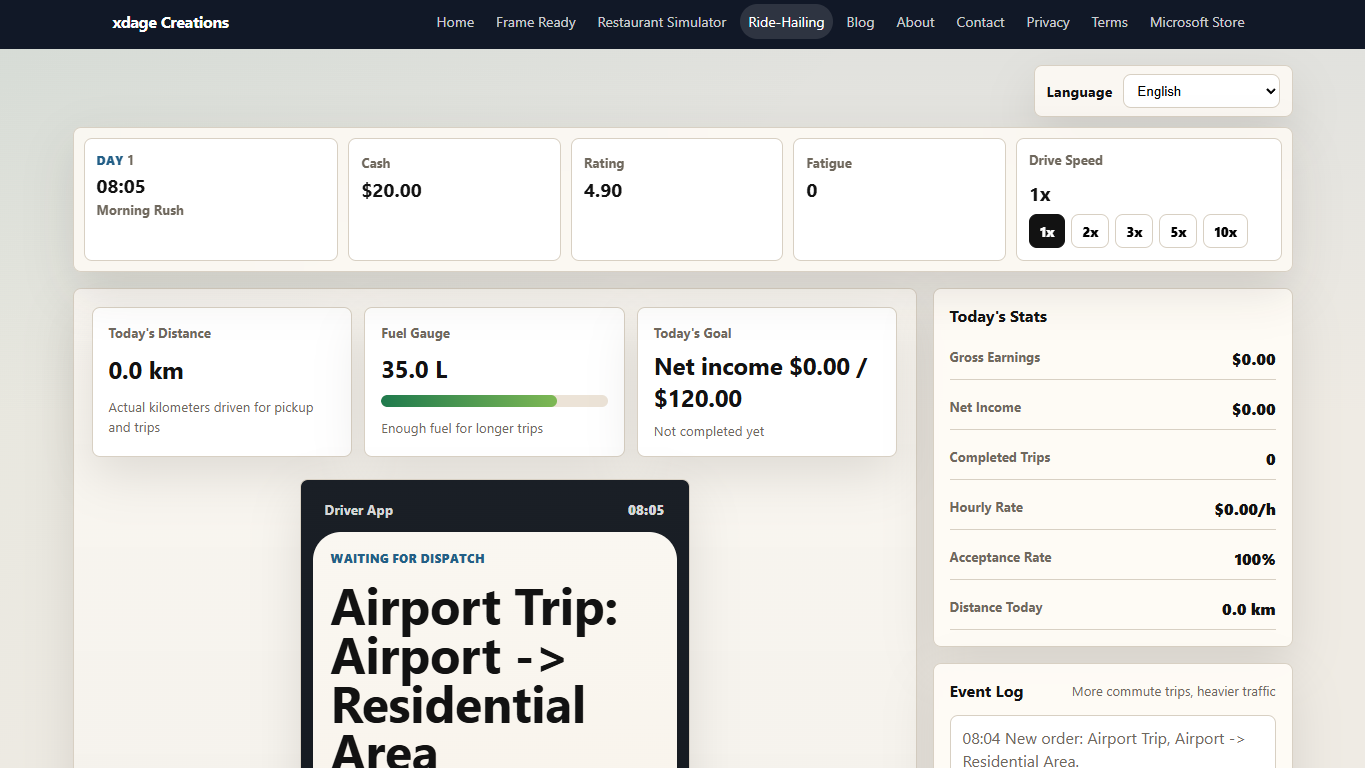
Fuel is not just a meter; it is a constraint on which orders you can safely accept. If the tank gets low, long trips and airport trips become dangerous. The game may even block a ride if there is not enough fuel. Refueling takes time and costs money, so the best time to refuel is not always the moment the tank is almost empty. Refuel when the schedule can absorb the delay and when low fuel would otherwise force you to reject valuable rides.
A common mistake is chasing one more good-looking order while fuel is already tight. If the ride has a long pickup, heavy traffic, or high fuel cost, the net result may be worse than it looks. A disciplined player watches the fuel gauge before accepting anything with meaningful distance. When the tank is healthy, you have choices. When the tank is low, the platform controls you because many orders become impractical.
Fatigue and rating are connected
Fatigue rises as you drive. At first it may look harmless, but high fatigue increases the risk of poor service and rating damage. Rating is important because better ratings can improve access to valuable rides, while a slipping rating can reduce the quality of opportunities. Resting costs time, but it can protect the rest of the day. The decision to rest is a tradeoff between short-term earnings and long-term reliability.
If your fatigue is high and the next order has risk tags like rushed passenger, traffic, route-sensitive rider, or long distance, think carefully before accepting. One bad ride can hurt both time and rating. If the day is still early, a rest break can be a good investment. If the day is nearly over and you are close to the goal, you may decide to push through. The simulator is strongest when these choices are not obvious.
Use time slots to your advantage
The day changes by time period. Morning rush brings commute trips and heavier traffic. Midday demand is steadier but may have fewer high-value rides. Evening rush can bring more surge, but passengers are often more impatient. Night can create longer rides and slightly higher rating risk. These patterns should change how you accept orders. A mediocre order at midday may be acceptable if the market is slow. The same order during evening surge might be worth rejecting while waiting for a stronger opportunity.
Do not use one rule all day. In high-traffic periods, pickup distance and estimated time deserve extra attention. During calmer periods, a standard ride may be a reasonable way to keep income moving. Near the end of the day, compare every ride against the remaining goal. If you only need a small amount of income, a safe short ride may be better than a risky long one. If you are far behind, you may need to take calculated risks with surge or longer trips.
Watch the event log
The event log is more than flavor text. It tells you what the platform and the road are doing to your plan. Traffic jams, late passengers, clear roads, tips, route complaints, vehicle issues, low fuel warnings, and rating warnings all change the story of the day. Read the log after each completed ride. If the log shows repeated delays or fatigue warnings, slow down and reassess. If the log shows steady net income and a healthy acceptance rate, your current strategy may be working.
The summary panel is equally important. Gross earnings can look impressive, but net income is the number that matters. Platform fees, fuel costs, and other costs reduce the result. Completed trips show activity, while hourly rate shows efficiency. Acceptance rate tells you whether you are being selective or too passive. Distance today tells you how hard the car is working. Good play means balancing all of those numbers instead of optimizing only one.
A strong beginner strategy
Start with the default income goal. Accept standard rides with reasonable pickup distance and acceptable net income. Be cautious with low-gross short rides unless they are very quick. Accept long or airport rides only when fuel is healthy, fatigue is manageable, and the estimated net is clearly worth the time. Rest before fatigue becomes extreme. Refuel before low fuel removes your choices. During surge, look for strong net rides but avoid letting urgency blind you to rating risk.
The best mindset is to think like an independent operator. The platform offers opportunities, but it does not guarantee profit. Your job is to filter those opportunities. A good day is not just a busy day; it is a controlled day where time, fuel, rating, and net income move in the right direction together. Once you can hit the default income target consistently, raise the goal or switch to trip mode for a different challenge.
Final advice
Ride-Hailing Driver Simulator is easiest to understand when you stop treating every dispatch as a yes-or-no reflex. Look at pickup distance, trip distance, estimated time, net fare, fuel, fatigue, and time of day before acting. The game rewards patience, but not endless waiting. It rewards hard driving, but not reckless fatigue. It rewards high-value rides, but only when the hidden costs do not erase the value. Play the day like a small business, and the simulator becomes a clear lesson in real operating tradeoffs.